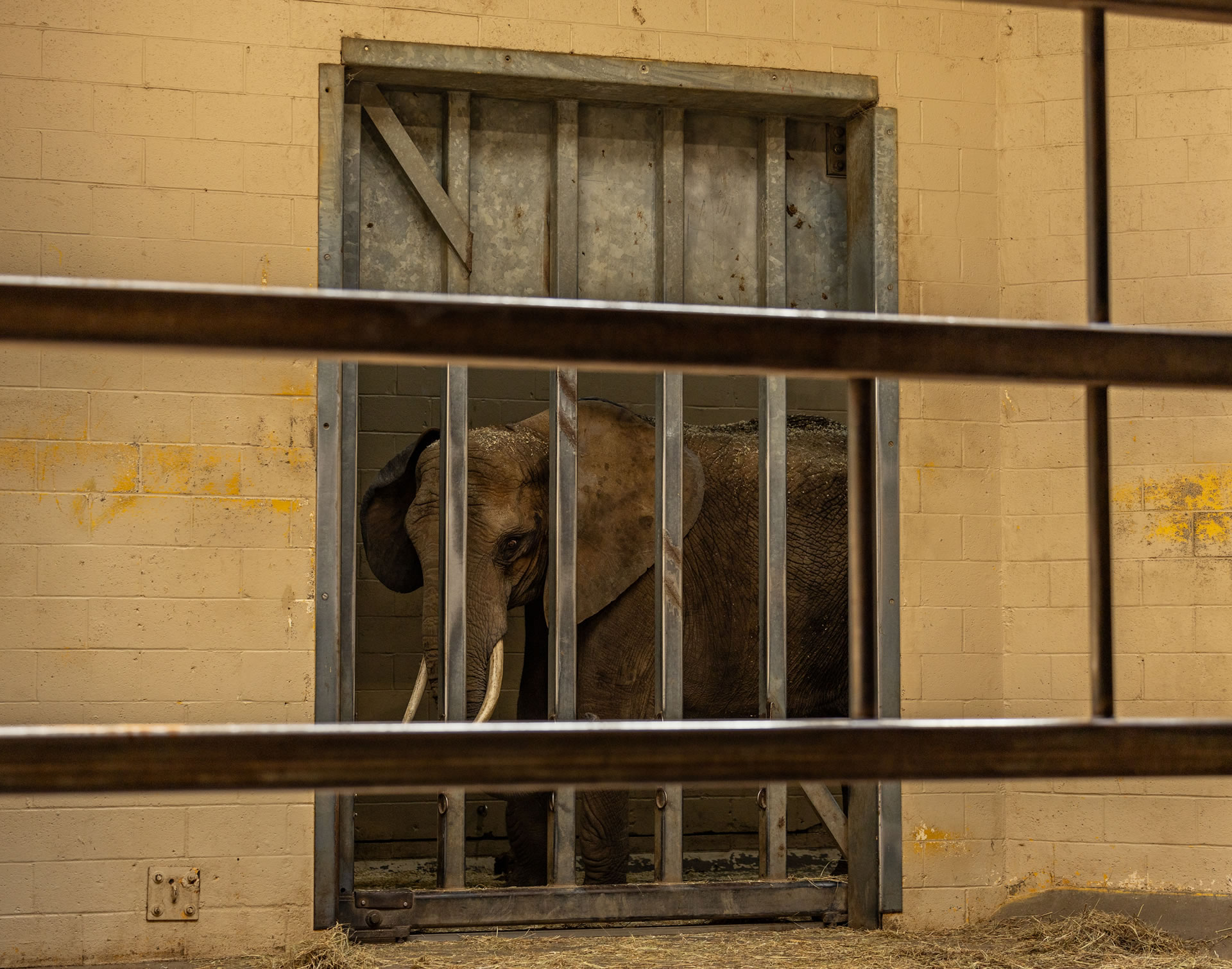
A Global Commitment to End Elephant Captivity
Sign the Declaration and Add Your Voice for the Elephants
Following the 2024 PAWS International Captive Wildlife Conference in Los Angeles, California, the Performing Animal Welfare Society (PAWS), Nonhuman Rights Project (NhRP), and Fondation Franz Weber (FFW) collaborated on a Declaration in Opposition to Elephant Captivity.
The Declaration reflects the growing body of scientific and ethical evidence demonstrating that elephants are highly intelligent, socially complex, and autonomous beings whose physical, psychological, and social needs cannot be adequately met in captivity. It is an international call for policies that will end the breeding, confinement, and exploitation of elephants.
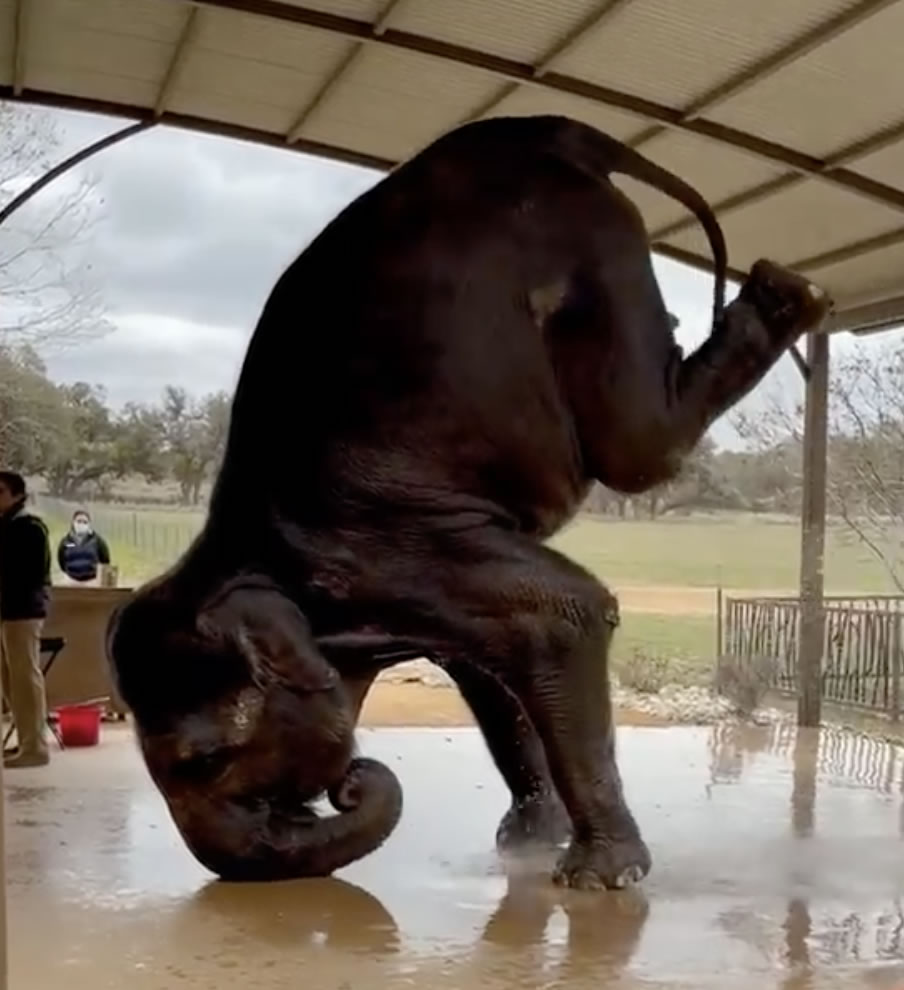
The Declaration was formally presented at the 2026 PAWS International Captive Wildlife Conference in Sacramento, California, on October 3. Initial signatories included respected scientists, veterinarians, legal scholars, conservationists, ethicists, elephant caregivers, and animal protection professionals from around the world.
We invite professionals, advocates, and all those who care deeply about elephants to add their names in support of the Declaration. By signing, you can join an international call for meaningful change in how elephants are treated and protected.
Your signature will help amplify the message that elephants deserve to live freely in their natural home ranges – not confined for human entertainment or exploitation – and to receive the respect, dignity, and protection they deserve.
Declaration in Opposition to Elephant Captivity
Whereas elephants are autonomous, highly intelligent, and socially sophisticated beings who possess complex cognitive and emotional capabilities, including self-awareness, theory of mind, problem-solving abilities, an understanding of causation, referential and intentional communication, extensive long-term memory, categorization abilities, empathy, and mourning rituals in response to death;
Whereas extensive scientific research has demonstrated that elephants suffer immensely in captivity due to the inability to engage in their natural behaviors, the deprivation of social networks, the confinement to small and inadequate spaces, and the physical and psychological harm inflicted by restrictive and unnatural conditions;
Whereas longevity alone is not an adequate measure of health or welfare, and elephants in captivity continue to exhibit signs of chronic stress, learned helplessness, and stereotypic behaviors which are absent in wild elephant populations;
Whereas biomedical studies have found that captive conditions can result in neural degeneration and compromised brain health in elephants, mirroring the neurological effects of trauma and depression in humans;
Whereas elephants in captivity are forced to participate in physically and emotionally harmful breeding programs, which not only result in few live births, but do not aid in the conservation of the species as elephants born in captivity remain there for the duration of their lives and are subjected to the same cruel practices as their parents;
Whereas the international community has increasingly recognized the ethical and scientific basis for prohibiting elephant captivity, as evidenced by legislative action, true sanctuary rescues and transfers, and judicial rulings acknowledging the cognitive and emotional complexity of elephants;
Whereas numerous jurisdictions around the world have taken legal and policy steps to prohibit or phase out elephant captivity, recognizing that the complex needs of elephants cannot be met in zoos or any other captive environments;
Whereas courts around the world have begun recognizing that elephants and other autonomous nonhuman animals may possess legal rights, including the right to bodily liberty, as exemplified by decisions in Argentina, Pakistan, and India that have resulted in the release of captive nonhuman animals to sanctuaries;
Whereas the public increasingly rejects the captivity of elephants and supports efforts to end their exploitation, as evidenced by declining attendance at elephant performances and growing advocacy on the elephants’ behalf;
Whereas legal scholars, ethicists, and jurists increasingly recognize that elephants are autonomous beings entitled to fundamental legal rights, including the right to bodily liberty;
Whereas the International Union for Conservation of Nature’s African Elephant Specialist Group opposes the removal of elephants from the wild, finds no value to their conservation in any such transfers, and rejects the use of elephants for any captive purpose;
Whereas the continued captivity of elephants in zoos, circuses, and other exploitative industries constitutes a violation of their autonomy and an unjust denial of their fundamental interests in living freely in their natural habitats;
Whereas ending the continued captivity of elephants and protecting their birthright to roam freely in their native lands would align with and strengthen principles of justice, liberty, fairness, and environmental conservation by ensuring that future generations of elephants can thrive in the wild;
Therefore, we, the undersigned scientists, philosophers, legislators, zoologists, legal scholars, animal welfare professionals, veterinarians, biologists, elephant caregivers, advocates, and religious leaders, call for an end to the keeping of elephants in captivity and for the recognition and protection of their right to live freely in their natural habitats. We urge the following:
- The current worldwide population of captive elephants must be the last—with captive breeding programs and the importation of wild-caught elephants coming to an end.
- Legislative bodies, courts, and other governmental entities must take immediate action to prohibit elephant captivity and enshrine legal protections ensuring that future elephant generations remain free in the wild.
- The autonomy and dignity of the remaining captive elephants must be prioritized, by reintegrating viable candidates to wild herds, transferring elephants to reputable sanctuaries where feasible, and improving the living spaces for those who must remain in their current confines.
Signed,
Jessica Almy | Executive Director, Nonhuman Rights Project
Robert Atkinson, PhD
Liv Baker, PhD | Chair, PAN Works
Brian Busta | Managing Director, Performing Animal Welfare Society (PAWS)
Richard William Byrne | Professor, University of St. Andrews
Scott Carter | Retired
David B. Casselman | CEO & Founder, The Ecoflix Foundation
Connie Chiang | Co-founder, Taiwan SPCA
Gary Comstock, PhD | Alumni Distinguished Undergraduate Professor of Philosophy, North Carolina State University
Luciana D’Abramo | Chief Programme Officer, FOUR PAWS International
John DiLeonardo | Executive Director & Anthrozoologist, Humane Long Island
Catherine Doyle, M.S. | Director of Science, Research and Public Policy, Performing Animal Welfare Society (PAWS)
Tenisha Du Toit | Researcher, Elephant Reintegration Trust
Courtney Fern | Director of Campaigns, Nonhuman Rights Project
Brooke Friswold, PhD | WildChoices
Marion E. Garai, PhD | Elephant Reintegration Trust
Erika Helms | Global Manager, Jane Goodall Institute Global
Kathy Hessler | Assistant Dean, Animal Law, The George Washington University Law School
Barbara Hodges, DVM | Veterinarian
Liz Cabrera Holtz | Senior Campaigns Manager, World Animal Protection
Rebekah Hoskins | Elephant Caregiver, Performing Animal Welfare Society (PAWS)
Chae Iltaek | Strategy and Policy Department Director, AWARE
Bob Jacobs | Professor Emeritus, Colorado College
Mark Jones, DVM | Veterinarian, Born Free Foundation
Rob Laidlaw | Executive Director, Zoocheck Inc.
Carrie LeBlanc | Executive Director, CompassionWorks International
Hyung Ju Lee | CEO & Founder, AWARE
Jisoo Lee | Researcher, AWARE
Phyllis Lee | Amboseli Trust for Elephants
Matthew Liebman | Professor and Chair of the Justice for Animals Program, University of San Francisco School of Law
Keith Lindsay, PhD | Amboseli Trust for Elephants and Fondation Franz Weber
Patricia London, DVM | Elephant Wellness Project
Lori Marino | Academic Researcher , New York University
Karen McComb, PhD | Professor
Brett Mitchell | Founder and Chairman, Elephant Reintegration Trust; Co-founder and Director, WildChoices
Ulara Nakagawa | Founder, Elephants in Japan
David Neale | Animals Asia Foundation
Elizabeth Novogratz | President & Founder, Species Unite
Les O’Brien | Elephant Consultant
Michael Pardo, PhD | Senior Scientist, ElephantVoices
Jinhwa Park | Senior Researcher, AWARE
Joyce H. Poole, PhD | Scientific Director, ElephantVoices
Heather Rally, DVM | Veterinary Medical Director, Thrive Wild, LLC
Ian Michael Redmond | The Ecoflix Foundation
Jan Schmidt-Burbach, DVM | Director of Wildlife Research and Veterinary Expertise, World Animal Protection Denmark
Tom Sciolla | Director of Projects, Fondation Franz Weber
Peter Singer | Professor of Bioethics, Emeritus, Princeton University & Visiting Professor, National University of Singapore
Quinton Staggs | Elephant Caregiver, Performing Animal Welfare Society (PAWS)
Ed Stewart | Co-founder and President of the Board of Directors, Performing Animal Welfare Society (PAWS)
Peter Stroud | Independent Zoological Consultant, Former Zoo Director and Curator
Vera Weber | President, Fondation Franz Weber
Joe Wills, PhD | University of Leicester
Anna Zangger | Lawyer, Fondation Franz Weber
Additional signatures to come