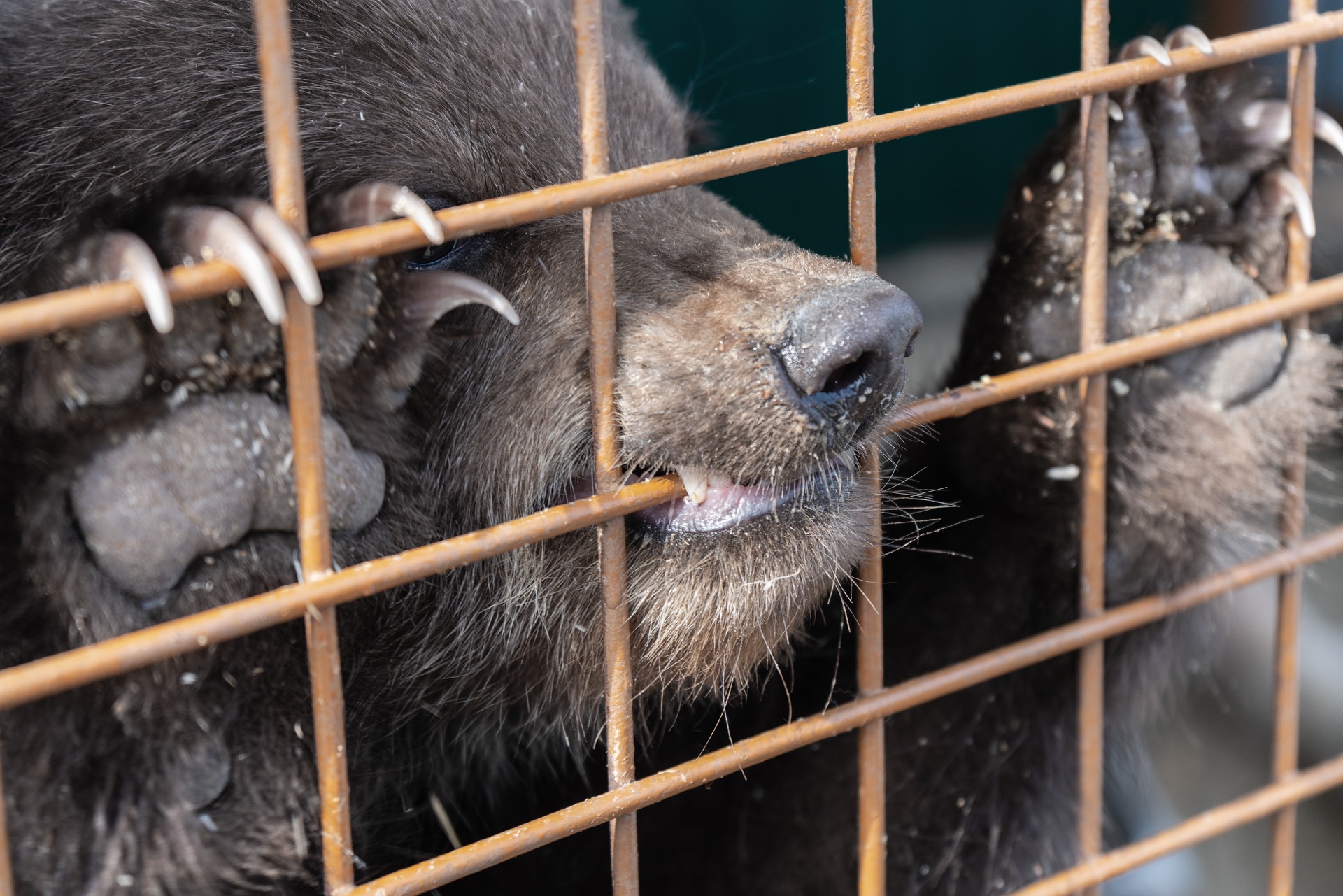
Help End the Cruel Exploitation of Bears
Bears are the overlooked animal.
Big cats and elephants used for entertainment often capture our attention, but did you know that captive bears are also harmed? In the U.S., about 1,000 bears are caged and exploited for entertainment and display in roadside zoos.
Bears are very smart and active animals. They are also large, powerful, and wide-ranging, with home ranges of 50 square miles or more. Bears are constantly on the move, active for about 18 hours a day.
Sadly, these animals are exploited in several ways:
Roadside zoos confine bears in small, filthy enclosures, with inadequate diets, shelter, and care. Bears may become obese, suffer foot and joint problems due concrete flooring, and display abnormal repetitive pacing and head rolling.
Bear pits are deep concrete enclosures. All the bears can see are high concrete walls and people hovering above them, a continuous source of stress. The bears unnaturally beg for food and repetitively pace.
The pet trade is another source of suffering. “Pet” bears are often confined in tiny backyard cages where they spend their lives in misery, deprived of all that is natural to them. Captive-born bears retain their wild instincts and are capable of inflicting serious injury and death.
Film, advertising, and television continue to use bears. Handlers often use cruel training methods to ensure bears performs consistently and on cue. Media images can send the wrong message about bears or suggest they are suitable as pets.
Bear cub petting operations profit by selling interactions and photo opportunities with bear cubs. Baby bears are cruelly taken from their mothers shortly after birth. They soon are exposed to stressful handling by the public, potential injury, and abuse. Once a cub grows too big for handling, they may be sold to private owners, other zoos, or bred to produce more cubs. Unwanted bears are sometimes slaughtered for the exotic meat market.
Bear shows are like circuses. Muzzled and leashed, bears are forced to balance on balls, ride scooters, and walk on their front legs. Bears are hauled from show to show in filthy, cramped trucks, and they are subjected to inhumane training. Bear shows may be found at county fairs and roadside attractions.
Pseudo-sanctuaries may offer cub petting or always have baby bears on display. True sanctuaries do not buy, sell, breed, trade, make their animals perform, or allow direct contact with wild animals of any age.
Want to learn more? See our FAQs for more bear facts, then sign our petition and pledge to help captive bears.
PAWS wants your pledge to:
- Never pet or take a selfie with a bear of any age.
- Never attend a performing bear show.
- Never visit a roadside zoo or bear pit.