Public “Encounters” Harm Captive Wild Animals
Wild animals are not props or playthings. Yet captive wildlife “encounters” and “experiences” – where the public can hold, pet, and feed captive wild animals – are on the rise. These encounters harm animals, endanger people, and undermine legitimate conservation work.
What Are Animal Encounters?
Public encounters include handfeeding, petting, holding, or taking photos with captive wild animals – often marketed as harmless fun or “education.” These encounters are offered at roadside zoos, private menageries, schools, petting zoos, pet stores, birthday parties and other events. Commonly exploited species include:
- Nonhuman primates
- Sloths
- Kangaroos and wallabies
- Otters and capybaras
- Wild cats such as servals and caracals
- Elephants, bears, and other animals
Sloths
Sloths are solitary, primarily nocturnal rainforest animals with highly specialized physical and dietary needs. Though slow-moving, they are surprisingly strong and will defend themselves with long claws and sharp teeth.
Kangaroo and wallaby
Kangaroo and wallaby babies (called joeys) are prematurely separated from their mothers to be used for public encounters. They normally stay in their mother’s pouch for nine months and wean at a year and a half.
Servals and caracals
Servals and caracals are fast, powerful predators with strong jaws built to subdue prey. Both are capable of unprovoked attacks, inflicting serious bite and claw injuries.
Why These Encounters Are Inhumane
Animals suffer – and die – in poor conditions.
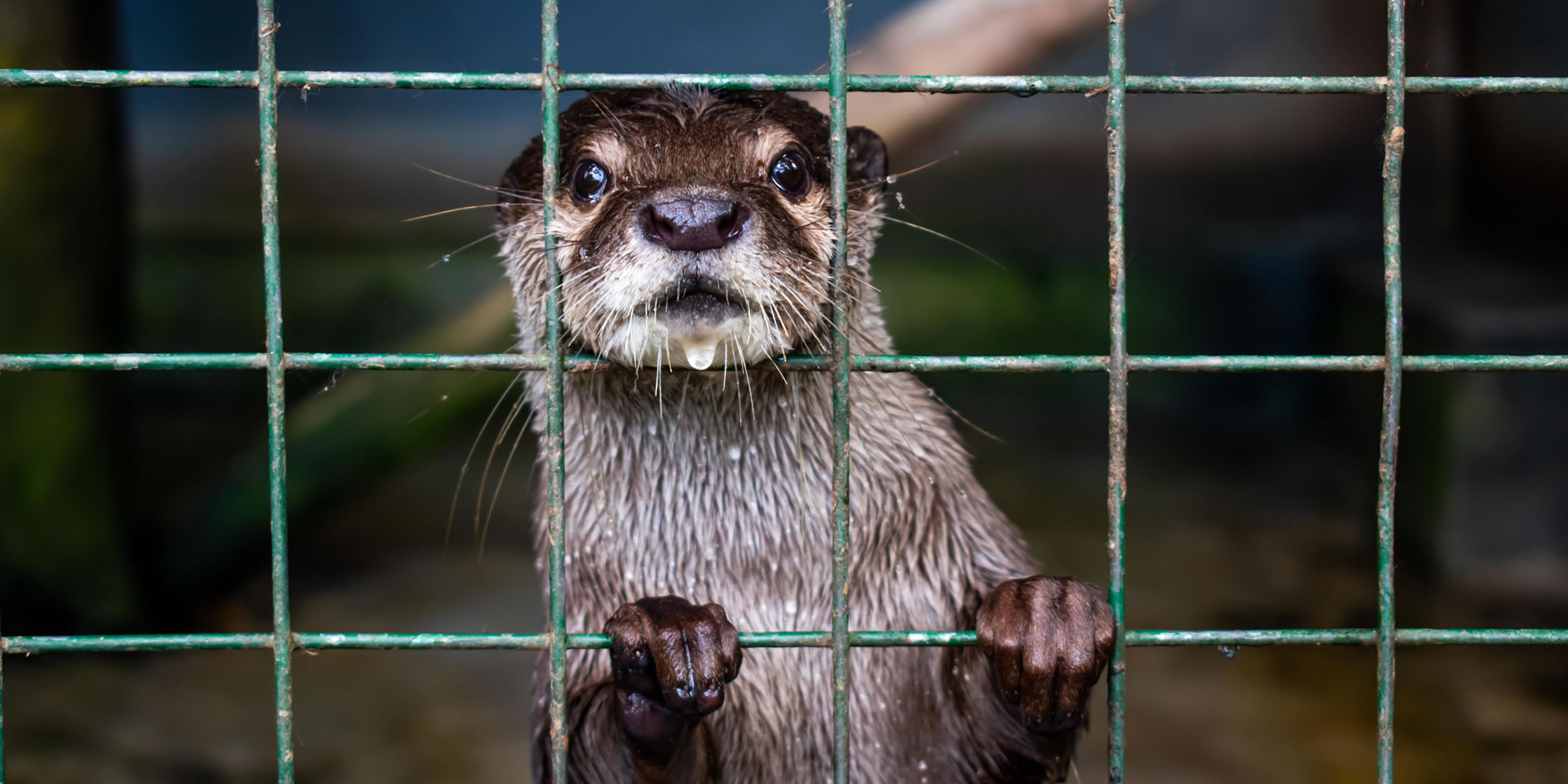
Facilities offering public contact are frequently cited for animal welfare violations including lack of adequate care, failure to provide veterinary care, and poor living conditions. Otters have died from the stress of transport and public handling; sloths have endured inadequate living conditions and been denied proper veterinary care.
Infants are torn from their mothers.
To provide a constant supply of “cute” babies, infants are separated from their mothers to be hand-raised by breeders and exhibitors, causing lasting psychological and physical harm. Wallaby joeys, who should still be in their mother’s pouch, have been passed around during public interactions.
Unwanted animals are cast aside.
Younger animals are preferable for public interactions, but once an animal grows too large, strong, or unpredictable for public handling, they may be discarded – sold to private owners, roadside zoos, or sent to auction. Their fate is uncertain, and rarely humane.
Breeding fuels exploitation.
Public contact facilities rely on exotic animal breeders for a diverse supply of animals. This fuels the broader exotic animal trade – an industry steeped in cruelty and exploitation.
Captivity doesn’t make public encounters safe.
No matter how they’re raised, wild animals retain their natural instincts – they are not domesticated. Any wild animal can lash out unpredictably, inflicting serious injuries and can even transmit disease.
False conservation claims mislead the public.
Multiple studies show that seeing people in contact with wild animals actually reduces public concern for imperiled species, decreases conservation donations, and increases interest in owning exotic pets. These programs hinder, not help, real conservation.
Encounters are largely unregulated.
No local, state, or federal agency has the resources to monitor the large volume of captive wildlife encounters, especially those that take place in private homes, schools, and other locations.
You can help!
- Never interact with or take photos with captive wild animals.
- Avoid fairs or other events that offer wild animal interactions and shows.
- Write letters to local newspapers opposing animal encounters.
- Speak out on social media to educate others.
- Support legislation in your area to ban wild animals in encounters and other entertainment.
Delve deeper into this subject with our fact-filled FAQs.